
I’ll touch on a couple of points and get straight to the point without keeping you too long.
First off:
It’s an undeniable fact that we’re living in a time where smartphones are seen as an essential part of life. But honestly, these things aren't actually indispensable at all. Same goes for the internet—a lot of people claim, "I can't live without it." Trust me, you can live just fine; don't listen to anyone who says otherwise.
Believe me, I’m not saying all this just to make a flashy introduction.
Whenever we invite friends to camp, the first thing I hear is, "Is there cell service there?" Kids nowadays don't even want to go anywhere if there's no Wi-Fi. Our kids, who grow up in homes with modern flush toilets, don't even know how to handle basic human needs out in nature anymore.
Life is full of unexpected situations, right? Does it really make sense for us to act like kids who had their favorite toys taken away just because there's no internet or cell reception?
As for the second point:
I run into people saying things like "That won't work, man," "That's not enough, man," "You absolutely need x and y, man," or "How on earth is that supposed to work?" all the time. People here tend to know a little bit about something and just stick to what they know. Nobody wants to step out of their comfort zone, take small risks, and actually experiment to see if a different way works.
Now, I’m not dismissing "industry standards" —that’s not what I mean. What I mean is that someone out there worked hard to innovate and establish those standards, but we constantly fail when it comes to the actual effort and development side of things.
If you’re still reading, you’re probably genuinely interested, so let’s cut to the chase: long-distance communication using low-wattage radios.
First, let me clarify: we're talking about HF here, not VHF-UHF.
Also, just so you know, this isn't a sponsored post or a paid product review.
First off, huge shoutout to our fellow hams who run minimum 100-Watt transceivers off 220V mains, use kilowatt power amps, antenna tuners, QRM eliminators, and equalizers, completely turning a spare room into a full-blown "ham shack." Kudos to them—they’re involved in amateur radio, which is easily one of the coolest hobbies out there. I say kudos because, to be honest, I don't have enough experience in the field to judge or evaluate what they do beyond praising them.
But when I asked around, "How can I get into this?", every single person gave me a massive shopping list. Experienced operators told me I needed gear that basically required a small financial investment.
On top of that, when you factor in the permissions needed to install antennas on residential buildings, I couldn't help but think: there has to be another way.
Besides, being locked into a setup at home without the ability to pack it up and take it wherever I go just didn't appeal to me.
Sure, I could have bought mobile rigs and mounted them in my vehicle. But if I wanted to jump on a quick QSO in the evening, was I really going to leave my house or my tent just to sit in the car? And what about places I couldn't drive to—places I had to hike into?
I needed something battery-powered. But running high power on batteries wasn't really feasible. Which brought me to the core question:
Can you actually achieve long-distance contacts with a low-wattage radio?
After tons of research and reading up on antenna theory, I finally took the plunge into the world of QRP.
QRP
Yep, Q-R-P. It comes from the early days of radio—one of those Q-codes that originally meant "Should I lower my power?" or "Lower your power."
Today, when people talk about QRP, they’re referring to low-wattage gear, the people who use it, and the whole community around it. Yes, there's a whole QRP community.
Alright, I was ready to take the risk. I decided to pick up a QRP rig.
SDR
The radio world is evolving rapidly today. SDR—Software Defined Radio—where radio hardware merges with computer processing, is likely going to become the new industry standard before long. Being able to use modern digital modes through a PC is pretty awesome.
That said, I was less interested in digital modes and more into voice contacts—SSB—and having a visual "waterfall" display that shows what’s happening across a whole frequency chunk rather than just seeing the single frequency you're tuned into.
Which QRP SDR Rig?
These days, it looks like the big legacy brands in amateur radio are finally starting to roll out portable SDR rigs. Yaesu is holding back a bit, while Icom is launching new stuff.
When I got started two years ago (2019), though, options were pretty limited. After searching around, I came across the "mcHF SDR QRP transceiver," a homebrew project by a guy named Chris (m0nka). It was a 5-Watt rig, continuously updated alongside open-source UHSDR firmware. I was looking at version 0.6. It was exactly what I was after, so I bought it.
Check out a few photos of it, and we’ll pick up below..
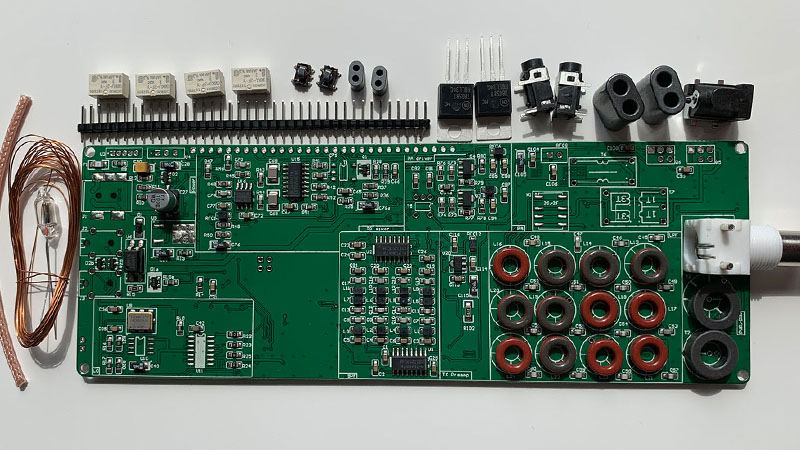
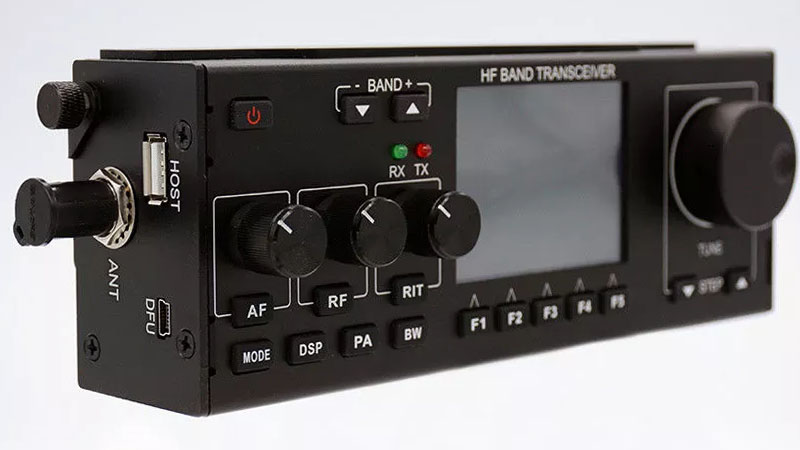
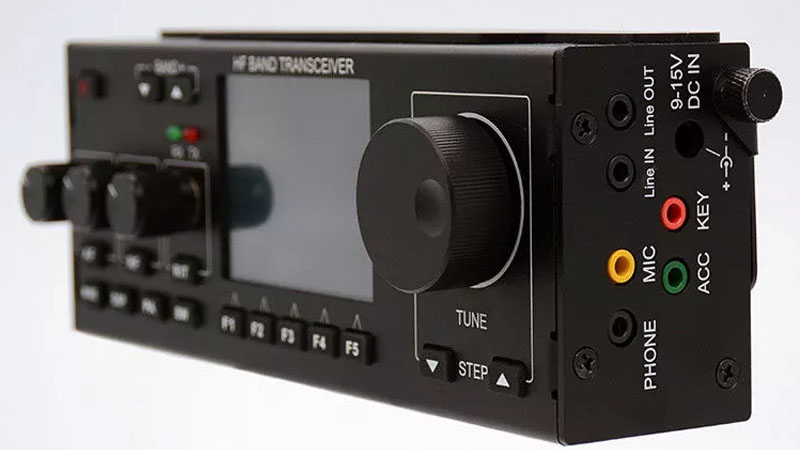
You can order the original unit directly from the developer or find plenty of "Chinese clone" variations on AliExpress etc. for around $350 USD.
I won't turn this into a product review—there are already tons of detailed reviews available online.
Antennas
If there's one thing I’ve learned so far, it’s that amateur radio is all about understanding antennas. Everything else is secondary and figure-out-able. But if you don't understand antennas, you're basically just burning resources.
A portable Yagi? Hardly practical. A cubic quad? Too bulky. What I really needed was just a simple piece of wire: a wire dipole.;
Sounds too simple? It really isn't. Honestly, I believe a simple flat plane can be far more complex than thousands of 3D polygons.
There’s a famous saying in radio, and it hits the nail on the head:
"If you know antennas, you can talk to the other side of the planet with 1 Watt. If you don't, you're just using 1 Kilowatt to heat up your shack."
Which Dipole Antenna?
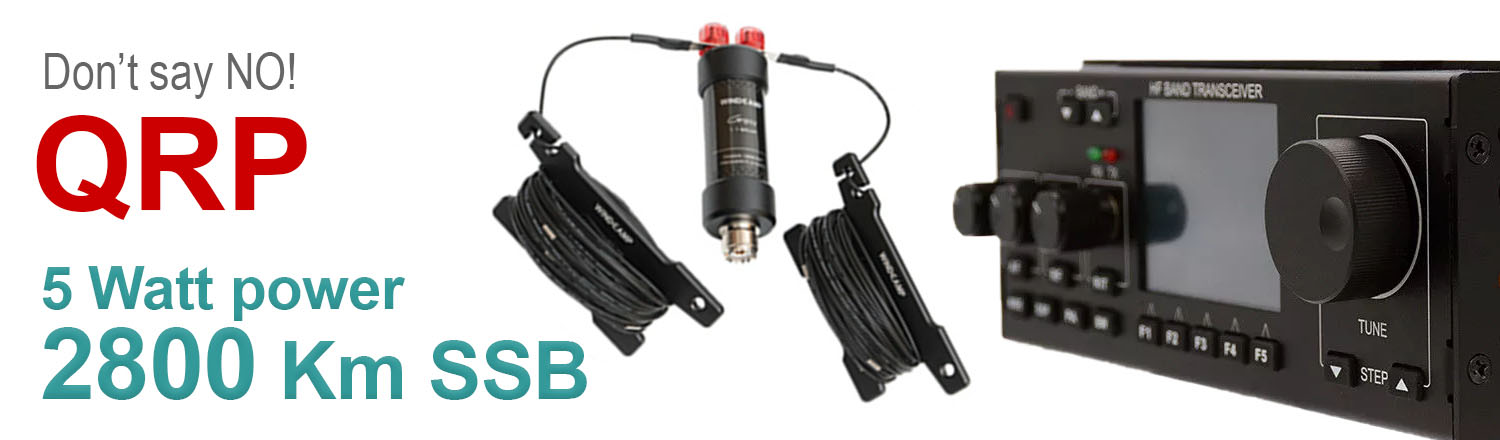
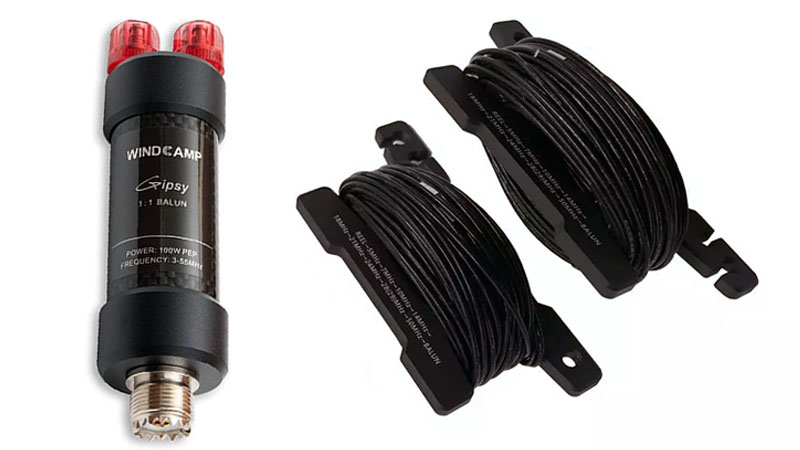
A dipole setup: a length of wire and a 1:1 balun. A clean, professional piece of kit made by an experienced ham. The WindCamp dipole. Goes for around $50 USD.
Li-ion
The most critical part: power.
What kind of battery setup was I going to run? Lithium-ion, obviously. But what form factor? 18650 cells. Wire 3 in series, add as many in parallel as you want, and you get 12.6 Volts with whatever capacity you need. Simple. I went with Samsung 2600 mAh 18650s.
THE RESULTS
Here are a few QSOs I made a while back on the 20-meter band at various distances.
Let's start local-ish. In the first video below, I worked Bulgaria (650 km), a British ham traveling around the Aegean region (400 km), and Israel (850 km).
In the second video, I stretched it out a bit further: contacts with Italy (1,700 km) and the Netherlands (2,000 km). Take a look:
The third video covers contacts with Germany (1,900 km) and Belgium (2,100 km).
The fourth features Denmark (2,100 km) and Belgium (2,100 km).
In this final video, I logged Russia (Ufa, 1,900 km), Belgium (2,100 km), France (2,300 km), and Barcelona, Spain at 2,800 km.
Plus, in the middle of the night—when everyone swore the band was completely dead—I made a contact with New Jersey, USA that I unfortunately didn't manage to record. Feel free to look up that distance yourself!
The point of this post isn't to put anyone down, talk trash, or brag. It’s to motivate all of us to keep learning, improving, and pulling off what people say is impossible. Because in this hobby, anything can happen.
Comments
very nice transceiver
very nice transceiver
Add new comment