Some friends following the site have been very persistent about me preparing an article on the oils to be used in Unimogs. Some said they just wanted to learn, while others stated they wanted to change the oils themselves instead of going to a service center.
What type of transmission oil should be used in a Unimog?
The answer to this question, which seems innocent, contains enough information to take you down a deep rabbit hole regarding transmission fluids. Let's start.
First, what is the "API" written on gear oils?
API stands for the American Petroleum Institute, the largest American trade association for the oil and natural gas industry.
Gear oils are classified by the American Petroleum Institute using GL ratings. The higher the GL rating of an oil, the more pressure it can withstand without metal-to-metal contact between the gear components.
Now, let's get to the issue.
There are two types of gear oils on the market that can be used in transmissions and axles: GL-4 and GL-5.
However, there has been a long-standing debate focusing on GL-4 vs GL-5. GL-4 users claim that GL-5 causes premature wear of synchronizer rings in transmissions. Proponents of GL-5 say that GL-5 is a superior product that replaces GL-4.
When deciding on transmission and axle oil, you may not know what GL-4 and GL-5 mean and what the differences are between these two classifications. Both have different characteristics, and choosing the wrong classification can cause serious damage to your vehicle, so choosing the correct oil is crucial.
Mercedes-Benz, states that hypoid gear oil should be used for Unimog axles, but they do not specify transmission oils as hypoid gear oil. So why is that? What happens if we use hypoid gear oil in the transmission?
Unimog transmissions do not have hypoid gears. They have straight and/or helical gears. The ring and pinion gears of Unimog differentials, like in many vehicles, are spiral/hypoid bevel gears.
Let me quickly explain the difference between hypoid and non-hypoid gears through the vehicle's transmission and differentials, rather than industrial designs.
First, let's look at the gears used in Unimog transmissions:
1- Spur Gear (Straight Gear)
In a spur gear, the teeth are cut parallel to the axis of rotation.
It is the cheapest and most common type to produce. It is used to connect parallel shafts rotating in opposite directions. It gives excellent results at reasonable speeds. Because the contact is simultaneous across the entire width of the meshing teeth, it operates noisily at high speeds.
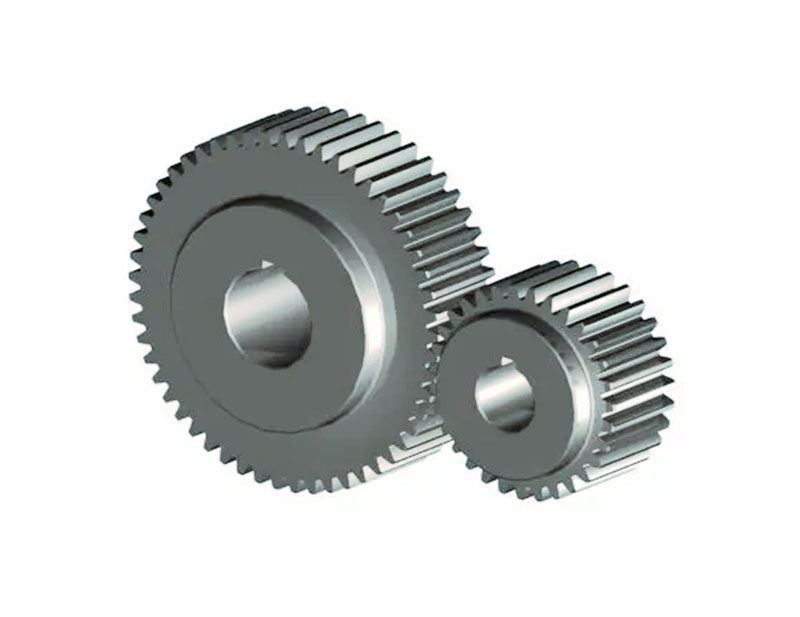
Spur gear
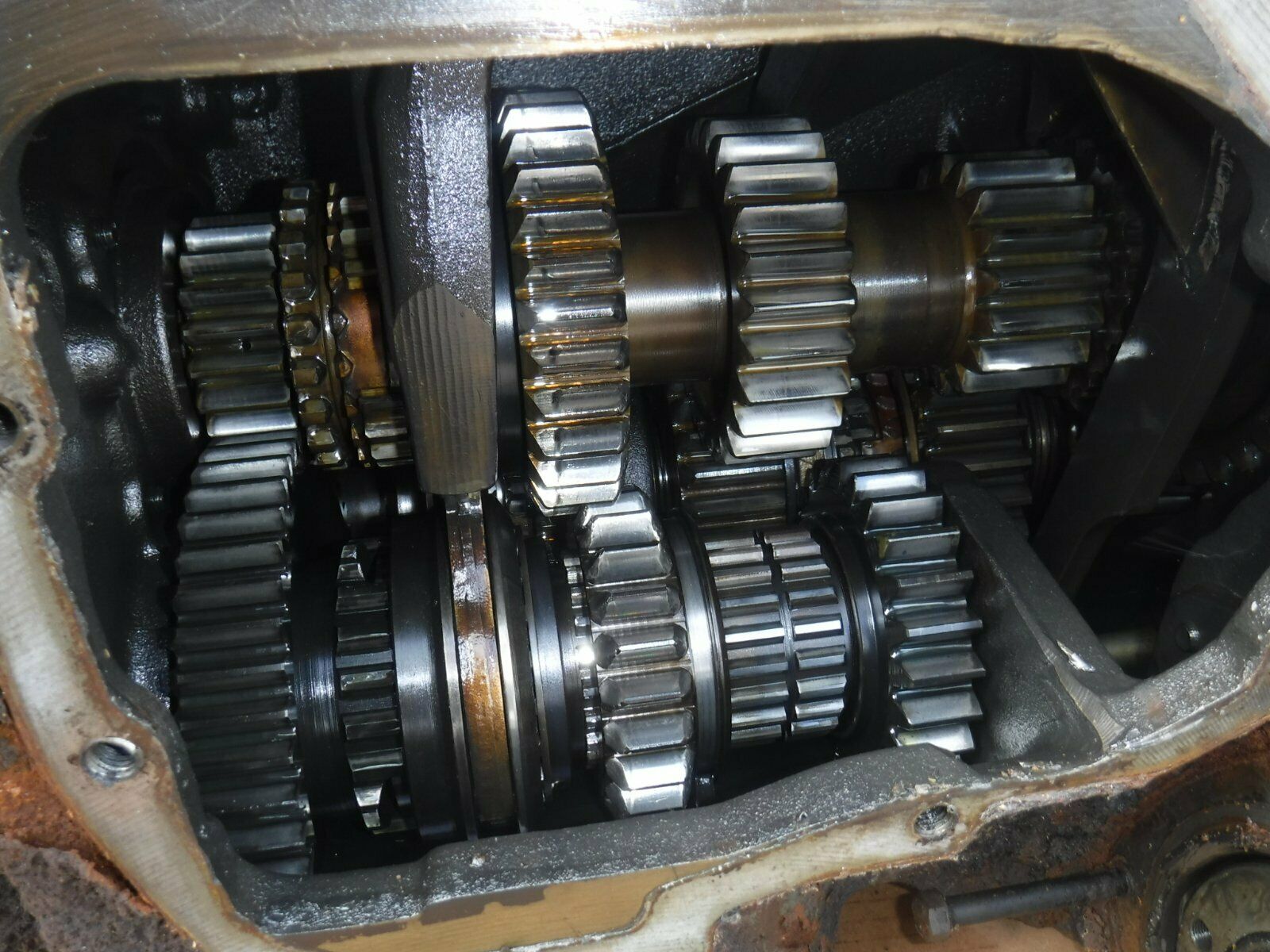
Unimog 406-416 transmission
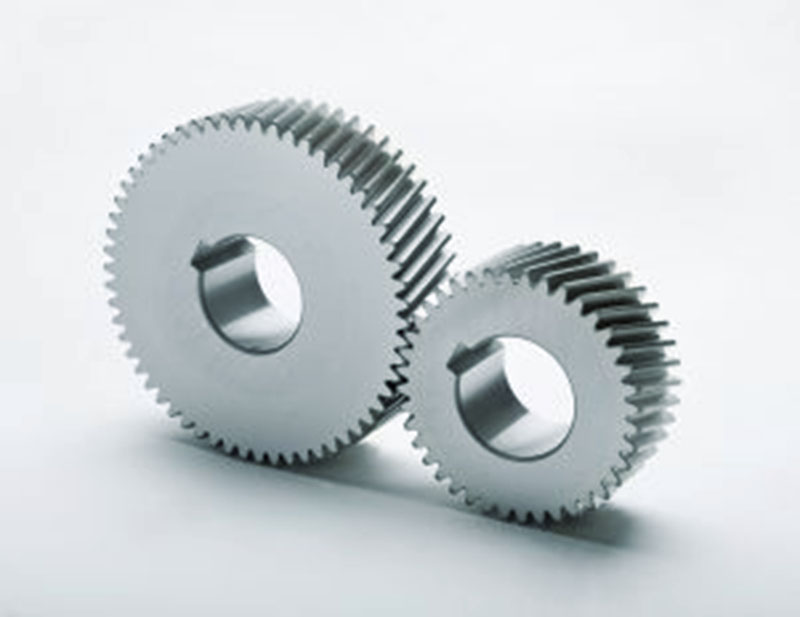
2- Helical Gear
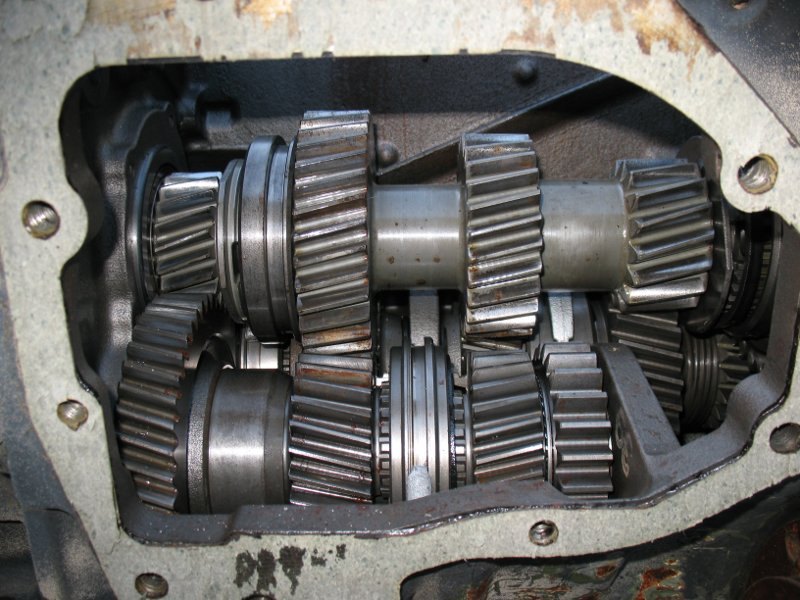
In a helical gear, the teeth are set at an angle rather than parallel to the axis of rotation. Compared to spur gears, they have a larger contact ratio. They can transmit more force and are very good at being quiet and having less vibration.
Helical gear
Unimog 419 transmission
Now let's look at the differential:
3- Bevel Gears
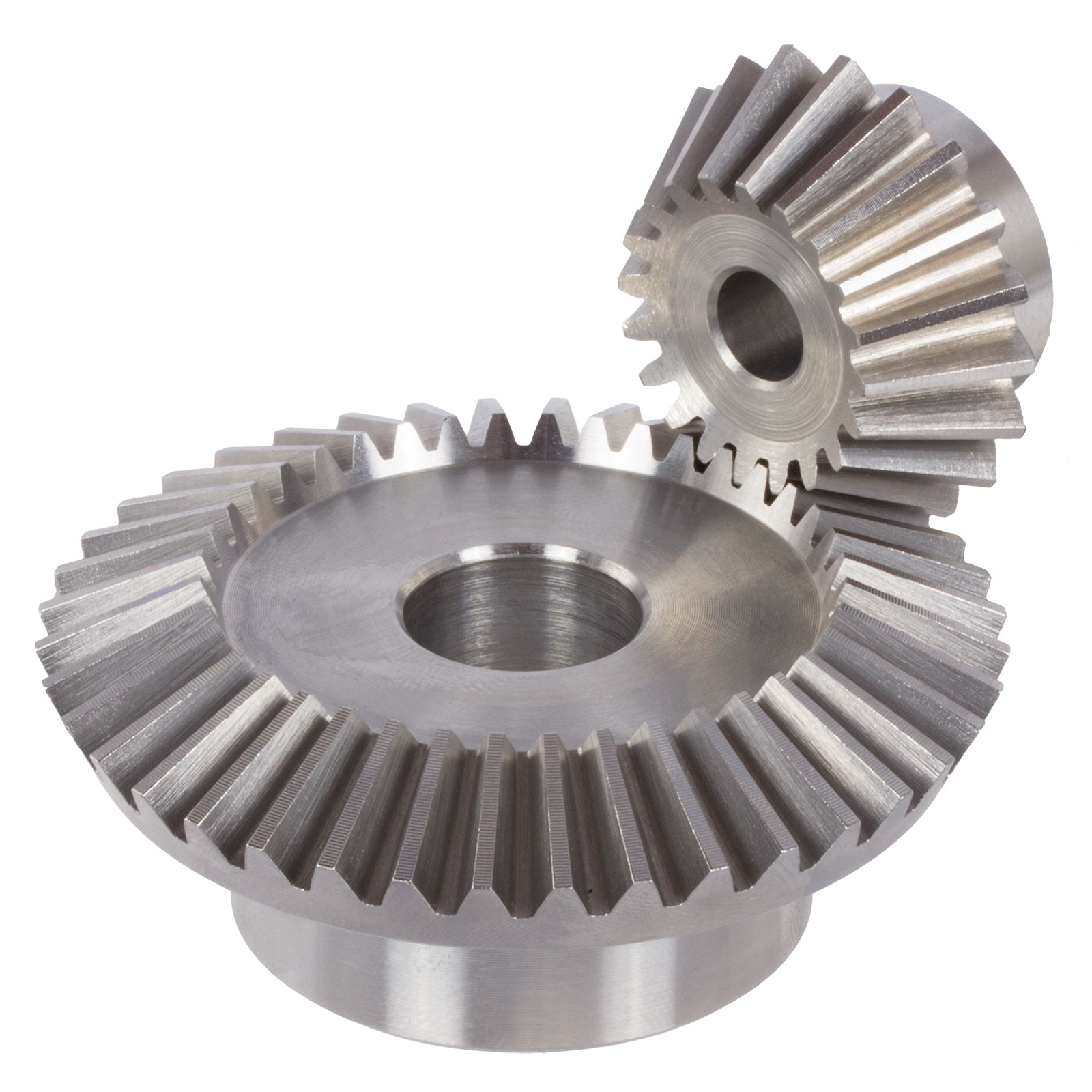
Bevel gears are gears where the axes of two shafts intersect and the tooth-bearing surfaces of the gears are conical in shape. These gears are used to turn the direction of the axis of rotation by 90 degrees. These are the gears we call the "ring and pinion" in differentials.
Briefly, let's look at three types:
a) Straight Bevel Gear: Conical gear with straight-cut teeth.
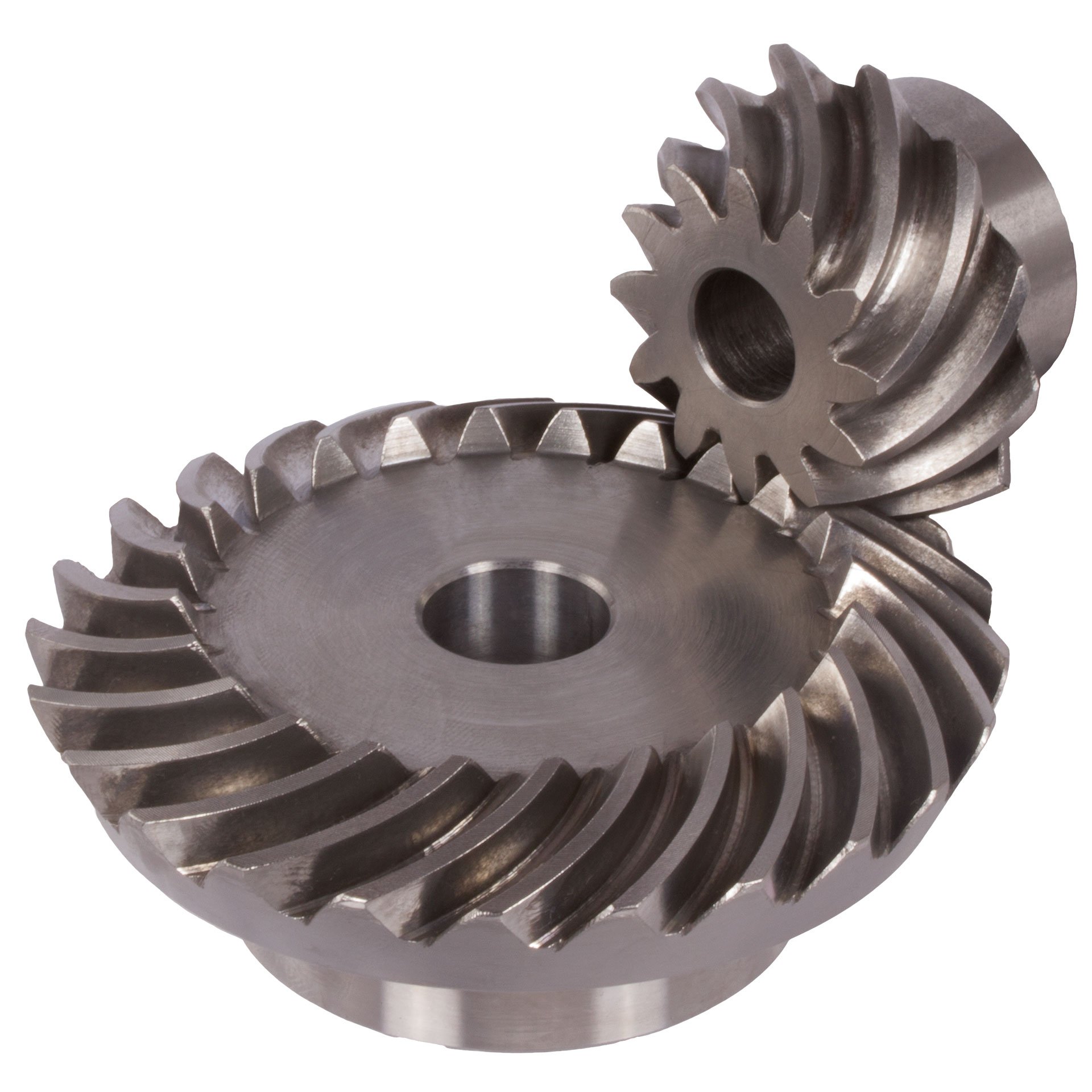
b) Spiral Bevel Gear: Conical gear with helical teeth. Because the axes of the gear pairs intersect, the helix angles of the ring and pinion gears are equal. It can withstand greater loads and operates more smoothly.
Straight Bevel Gear
Spiral Bevel Gear:
c) Hypoid Bevel Gear: Actually a type of spiral bevel gear, but the axes of the ring and pinion gears do not intersect as they do in a spiral gear. The pinion shaft is offset above or below the center of the ring gear. This offset makes the helix angle of the pinion gear larger than the helix angle of the ring gear.
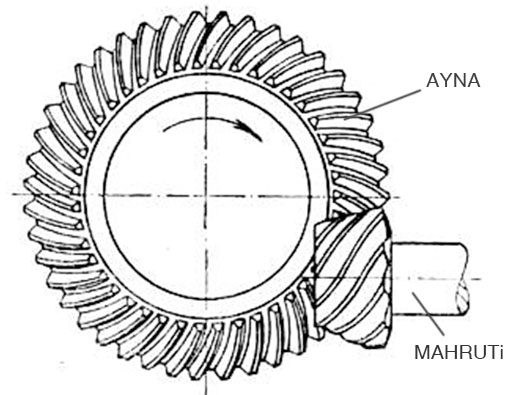
Hypoid Bevel Gear:
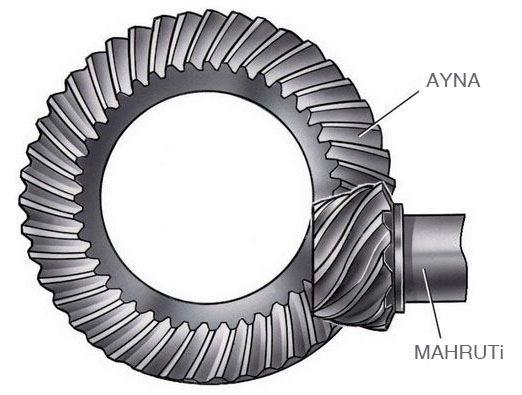
Hypoid Bevel Gear:
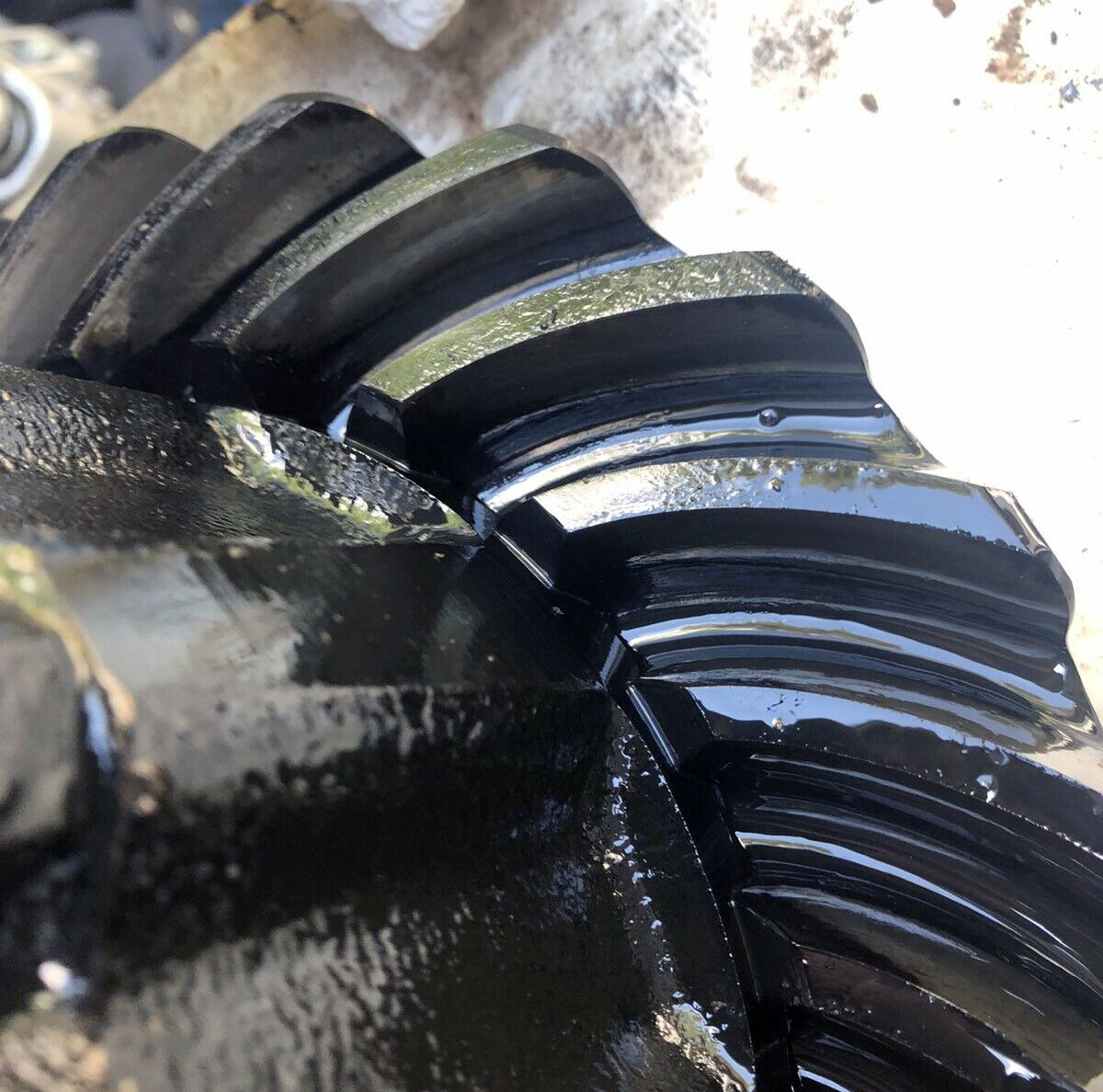
Unimog 406 ring
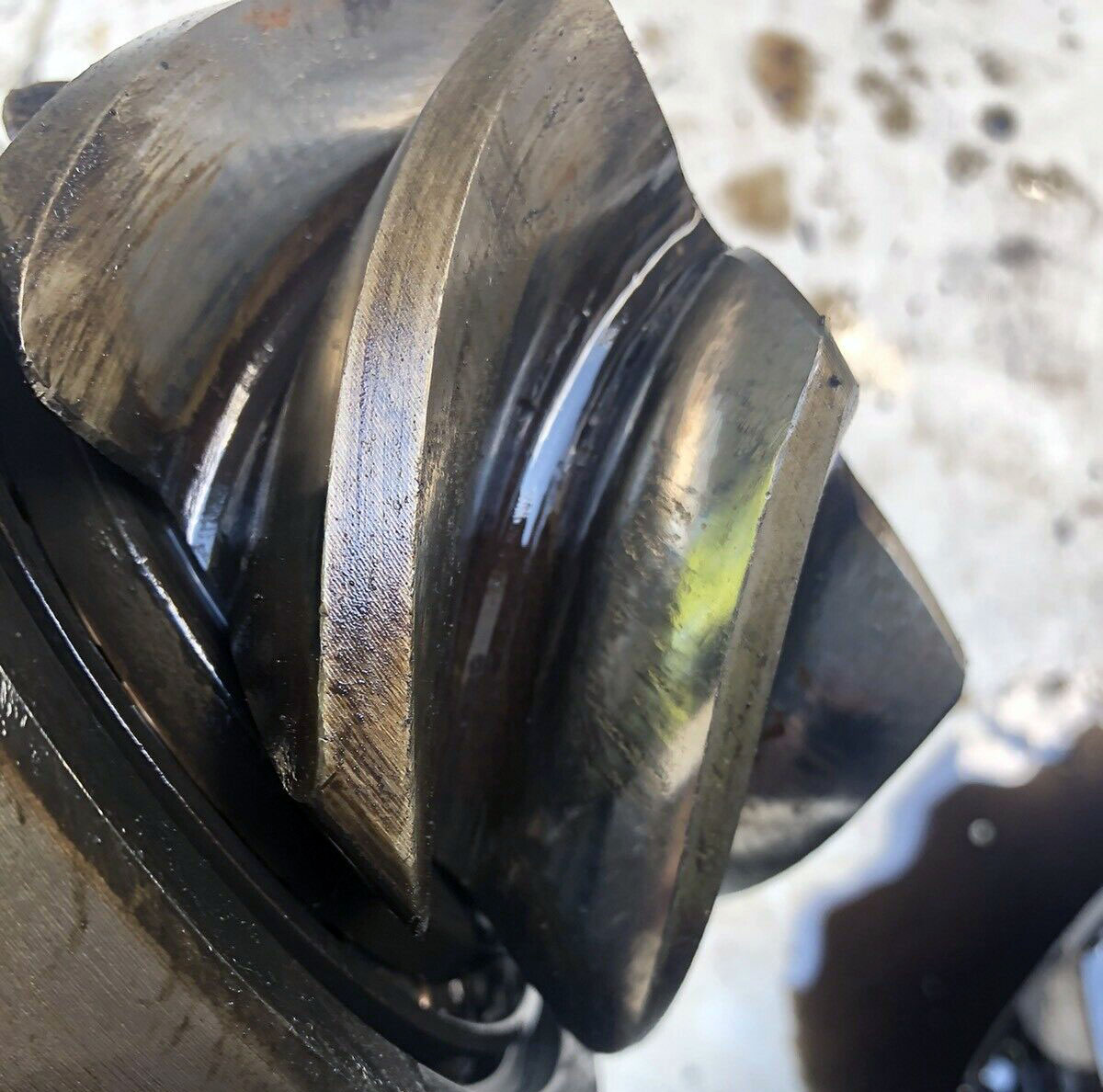
Unimog 406 pinion
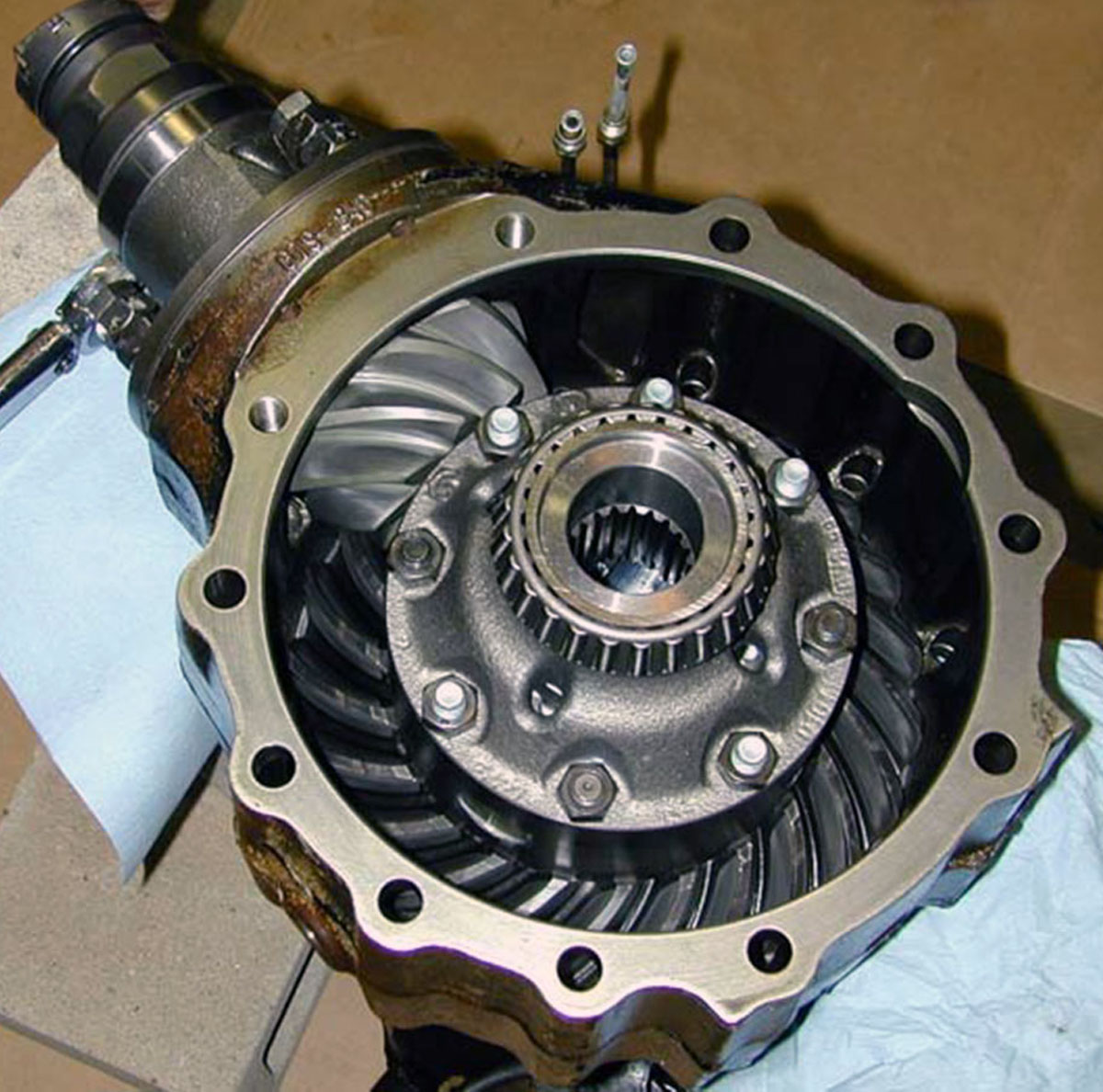
Unimog U1300L differential
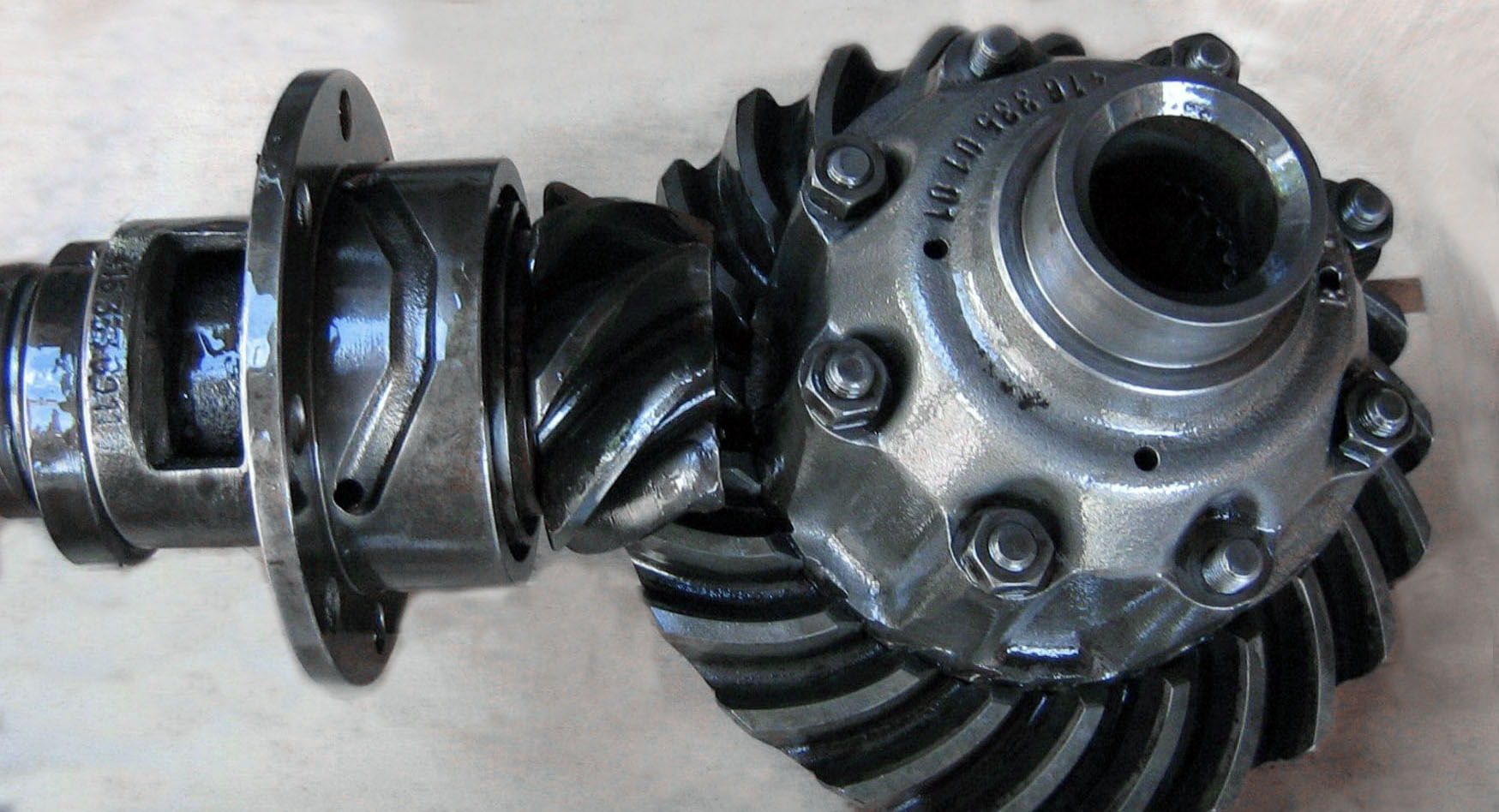
Unimog U1300L ring and pinion
Lubrication
We have seen the gears exposed to load in the transmission and axles.
To prevent wear and provide protection in these gear groups where metal-to-metal friction occurs, an oil suitable for their load must be used.
So, where is the highest load?
The greatest load and extreme pressure are in the differentials of the front and rear axles. Due to the sliding contact made by the ring-pinion gears in the spiral/hypoid structure in the differentials, the hydrodynamic contact pressures are extreme. The pressure between the ring-pinion gears with a hypoid design is called EP (extreme pressure).
In this environment where very high levels of stress occur, a specially produced EP (extreme pressure) gear oil is required to maintain effective lubrication, and this oil must be able to withstand very high pressures and temperatures.
Some oil brands define themselves as "hypoid," a term synonymous with EP. "Hypoid" is not actually related to the oil, but as we explained above, to the design of the gears—how the teeth are cut.
The Difference Between GL-4 and GL-5 Gear Oils
There are different classifications for gear oils. The classifications that concern us for this article are:
- GL-4
- GL-5
- MT-1
These different classifications describe a specific performance level, meaning the level of EP protection provided by the lubricant.
The higher the EP, the higher the GL category.
This type of gear oil contains EP additives designed to prevent wear between the sliding surfaces of hypoid gears and to increase resistance to degradation under high temperature and mechanical pressure.
GL-4 and GL-5 Additives
The fundamental difference between GL-4 and GL-5 gear oils is their capacity to withstand extreme pressure. In other words, the difference between GL-4 and GL-5 is the amount of EP additives.
A typical GL-5 gear oil has about twice the level of active additives of a GL-4 product. GL-4 rated gear oils have a milder EP additive package, meaning 30% to 50% fewer EP elements than GL-5 oils.
For full protection in Unimog differentials and portal hubs, GL-5 type gear oil must be used.
I asked earlier: "What type should the Unimog transmission oil be?" This is the point where the debate begins.
The Point of Contention
We mentioned EP additives, but what are these?
GL-5 gear oils contain sulfur and phosphorus-based additives as EP additives. But sulfur/phosphorus additives have a negative feature:
These additives release sulfuric acid, especially at high temperatures where the additives tend to decompose.
Copper-based alloys do not like acidic environments. Sulfuric acid is a very strong corrosive and reacts aggressively with yellow metals.
This is exactly where the debate starts.
Unimog differentials and portal hubs do not contain yellow metal. But what happens if this oil is used in Unimog transmissions that contain yellow metal?
The synchronizers in manual transmissions, that is, the synchronization rings, are made of yellow metal copper alloys, namely brass and bronze.
GL-5 has much higher concentrations of EP additives that can attack the "yellow metal" components of the transmission. These substances are sulfur compounds in GL-5.
So the problem is the molybdenum disulfide (moly-d) and other sulfur compounds used in GL-5 gear oils; they are added to the oil to increase the load-carrying and shear resistance of the oil, but sulfur attacks any copper alloy and therefore begins to eat away at the brass/bronze synchronizer rings in the transmission.
How is that, super! Isn't it? Hmm.
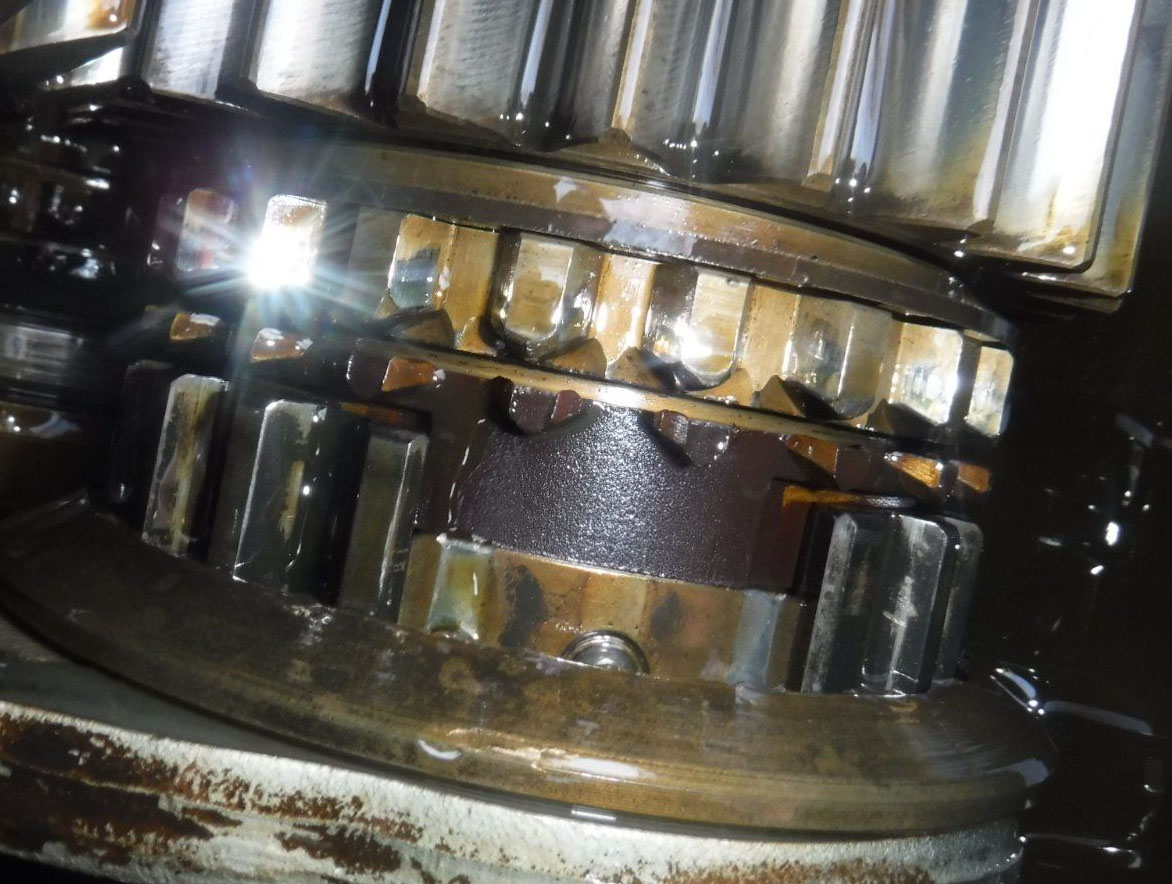
Unimog synchronizers
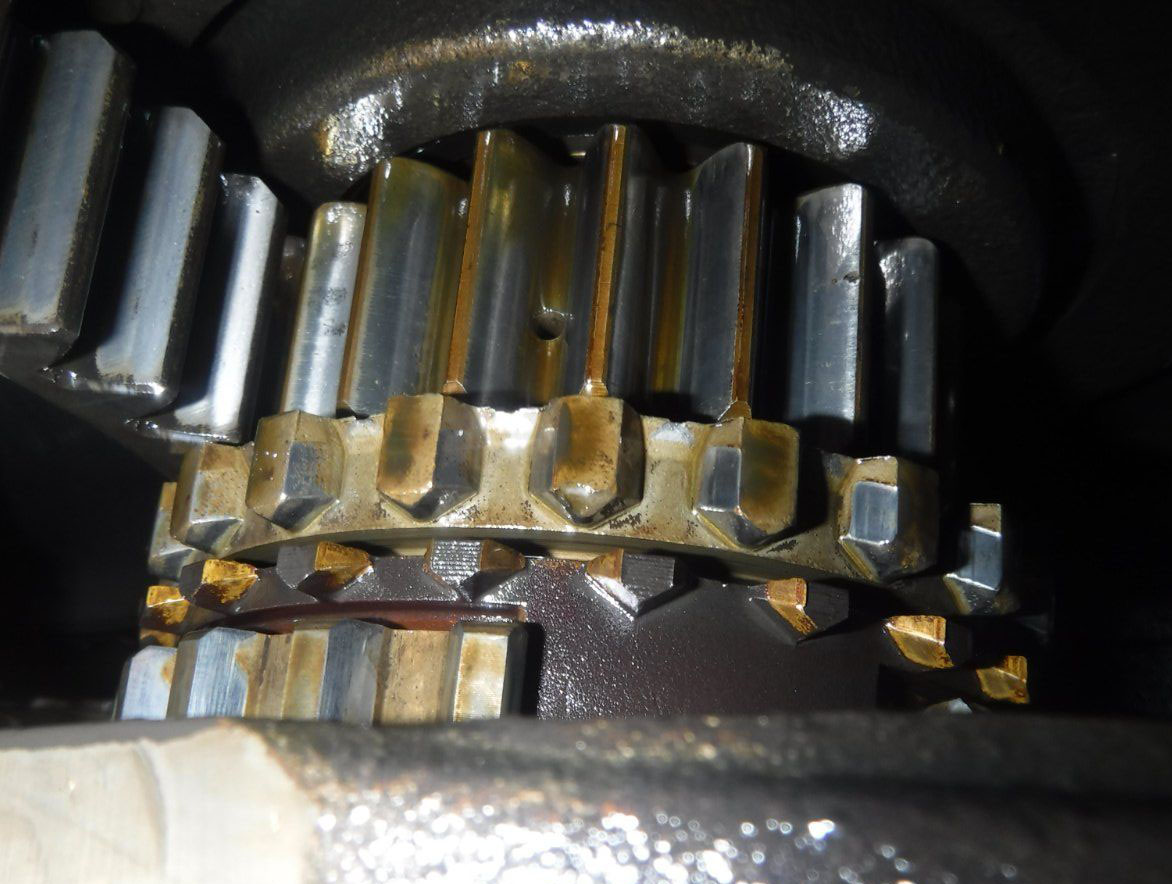
Unimog synchronizers
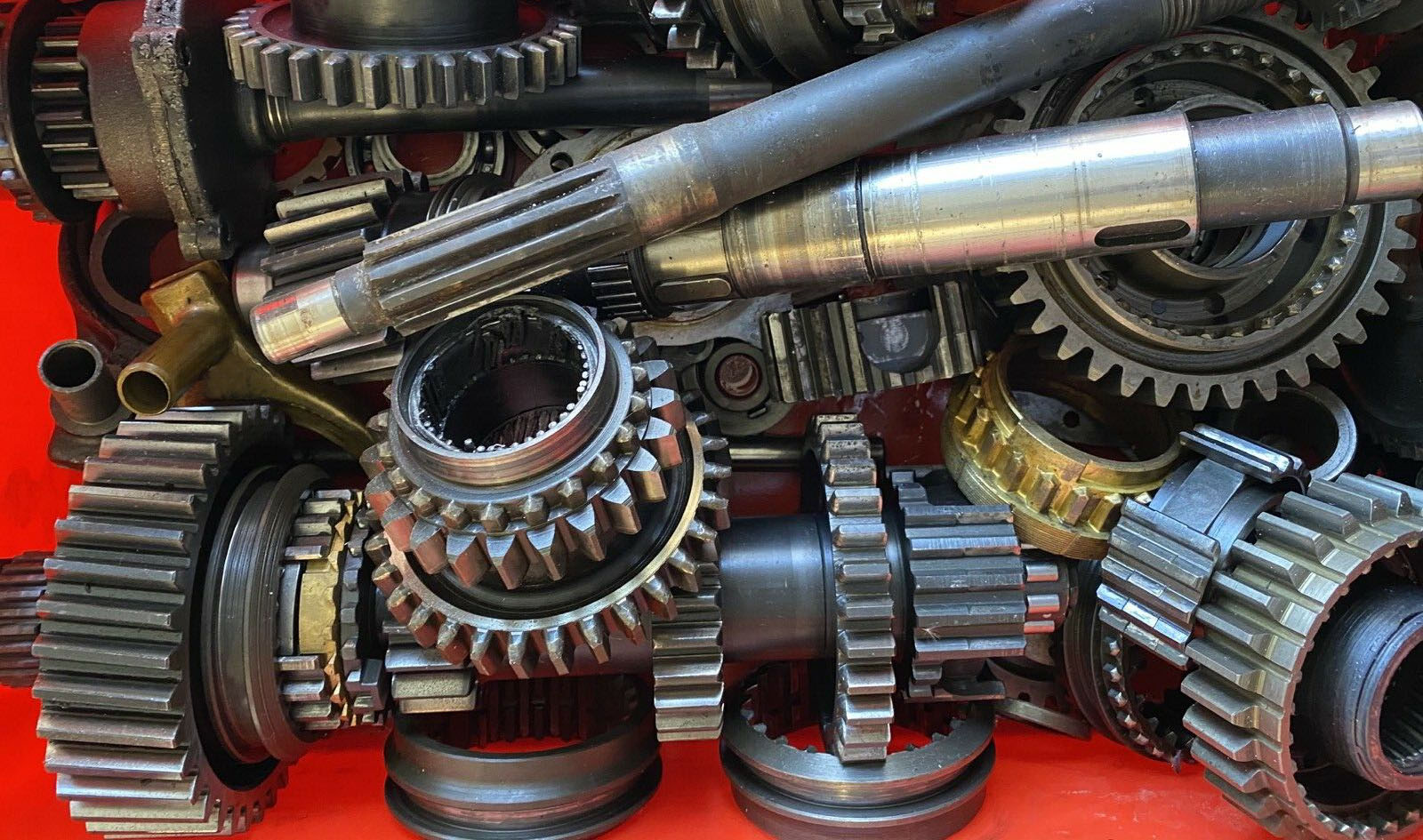
Unimog synchronizers
There are interesting examples of this.
The Unimog 419 transmissions produced for the US military have brass/bronze synchronizers.
Armies sometimes simplify lubrication schedules and reduce oil varieties.
According to US military lubrication instructions, GL-5 oil was used in these vehicles.
A retired technician trained on Unimogs recounts that the US government often sent him vehicles with worn-out synchronizer rings for repair.
GL-5 is designed for non-synchronized high-pressure gear structures. A manual transmission usually does not contain hypoid gears, so it does not need EP oil. Unless the manufacturer allows it, the use of GL-5 in a transmission is not recommended.
GL-5 and GL-4 gear oils do not meet the same specifications; product performance and testing are different.
Some people think that GL-4 is less aggressive toward non-ferrous parts like brass and bronze copper alloys and that manufacturer recommendations should be followed.
The main reason GL-4 is preferred over GL-5 in transmissions is that they are different types of oils designed for different types of applications.
Also, GL-4 oils provide a "better shifting feel" in transmissions compared to GL-5. Thanks to special additives called "friction modifiers" used in GL-4 type oils, drivers shift gears better due to better synchronizer engagement.
GL-5 Proponents
However, proponents of GL-5 argue that the claim of corrosion in GL-5 and synchronizers is just a marketing gimmick.
They say that most modern GL-5 oils contain metal deactivators that prevent the attacks of EP additives and that most GL-5 manufacturers do not use sulfur.
They state that almost all cars produced today have brass synchronizers in their transmissions and that it is ridiculous to think that oil companies would produce a product that would destroy every transmission they enter.
There are also those who say that there is no wear in transmission synchronizers, but there is serious wear in transmission gears because good protection is not provided by using GL-4.
MT-1
Along with all this, the API recently released another additional rating called MT-1, which is added to the end of GL-5 oils.
It is said that this MT-1 rated GL-5 oil is not corrosive at any temperature and does not damage yellow metals found in the transmission. It is written on package labels that almost all GL-5s are now MT-1, so that they can sell better oil for all old vehicles still in use today.
But there are also those who say that GL-5/MT-1 gear oils are not safer for brass/bronze synchronizers than non-MT-1 GL-5 oil, and that MT-1 gear oil is not suitable for synchronized manual transmissions and transfer cases.
CONCLUSION
I have tried to explain that manual transmission oils and differential oils are two completely different lubricants and that their formulations reflect this fact.
Also, GL-5 is not backward compatible with GL-4. In other words, oils that say GL-5/GL-4 on them do cover GL-4 in terms of protection, yes, but they are not pure GL-4 because of the additives they contain. Be careful with those who say "it covers both, buddy."
So, what type of gear oil will we use for Unimog differentials and portal hubs?
Answer: GL-5.
And what type of gear oil will we use for the Unimog transmission?
My friend’s 406, my own 416, as well as the transmissions of the Unimog U1300L, U1700, and some other models, contain brass/bronze synchronizer rings
After long research and reading that I have not written the vast majority of here, what I understood is that I should put GL-4 rated oil in the Unimog transmission. I use GL-4 type oil in my Unimog 416 transmission. Of course, your opinion and preference may be different.
You can also take a look at my article titled Mercedes-Benz Specifications for Operating Fluids.
Add new comment